
Introduction
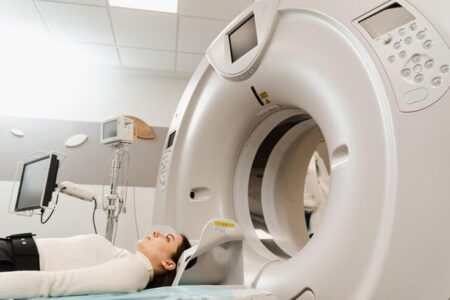
Medical imaging technique have transformed the way healthcare experts diagnose and treat medical conditions. Over the years, advancements in imaging technology have significantly improved the speed, accuracy, and safety methods, allowing early diagnosis, effective treatment planning, and continuous monitoring of patient health. These techniques provide a non-invasive or slightly invasive method to viewing internal organs, soft tissues, bones without the need for surgical procedures. In this article, we explore the major types of medical imaging, their uses, benefits, limitations, and the latest inventions in the field.
What Is Medical Imaging?
Medical imaging helps in diagnosis, monitoring disease development, guiding treatments, and manipulative response to therapy. These technologies are used to examine organs, soft tissues, bones, and other structures without any surgery. Medical imaging is a set of techniques that allow doctors to visualize the interior of the human body.
The main goal of this technique is to gather information that helps doctors make well-informed decisions quickly and accurately. and moreover if you want to know about zoonotic disease transmission through the aquatic food chain then click on for better guidance.
Types of Medical Imaging Technologies
1.X-ray Imaging
X-rays are one of the most common imaging methods. X-ray have high energy electromagnetic radiation to create images of the inside of the body, especially bones.
- Uses: X-ray detects fractures, infections, lung diseases, and dental problems.
- Advantages: X-ray imaging is quick, cost-effective, widely available.
- Limitations: Exposure to a small amount of ionizing radiation.
2. Computed Tomography (CT) Scan
A CT scan is an imaging test that uses x-ray and computer processing to form different angles to produce cross-sectional images of the body.
- Uses: CT scan diagnoses cancer, blood clots, internal injuries, and infections.
- Advantages: CT scan creates high detailed images, good for visualizing complex structures.
- Limitations: Higher radiation dose compared to standard X-rays. Higher radiation dose compared to standard X-rays.
3. Magnetic Resonance Imaging (MRI)
MRI is a non- invasive medical imaging scan that produces detailed images of almost every internal structure in the human body. MRI does not use ionizing radiation.
- Uses: MRI is a powerful diagnostic tool that is used for visualizing soft tissues like the brain and spinal cord.
- Advantages: MRI creates detailed images of soft tissues and their non-ionizing nature.
- Limitations: MRI is more expensive than X-ray imaging or CT scanning, and not suitable for people with certain metal implants.
4. Ultrasound Imaging
Ultrasound imaging is also known as ultra-sonography. It is a non-invasive medical imaging technique that uses high frequency sound waves to create a real-time image inside the body.
- Uses: Ultrasound monitor pregnancy, examining abdominal organs, guiding biopsies.
- Advantages: Ultrasound imaging shows movement of the body internal organs as well as blood flowing through the blood vessels.
- Limitations: Ultrasound is limited for imaging bones, lower image resolution or air-filled organs.
5.Nuclear Medicine Imaging (e.g., PET Scans)
In nuclear medicine, a small amount of radioactive material (tracer) is injected into the body, and a special camera detects the radiation to produce images.
- Uses: Heart disease, Cancer detection, Brain disorders.
- Advantages: Shows metabolism and functions, not just structures.
- Limitations: Nuclear medicine involves radiation exposures, expensive procedures.
Challenges and Considerations
There are challenges and considerations across imaging techniques MRI machines, is free from ionizing radiation, can be exclusive for patients with certain metal implants. Radiation exposure, from repeated CT scans, causes a health risk, through modern tools to minimize dosage. Furthermore, precise explanation requires trained radiologists, and growing demand for imaging has increased their workload.
Inventions in Medical imaging techniques
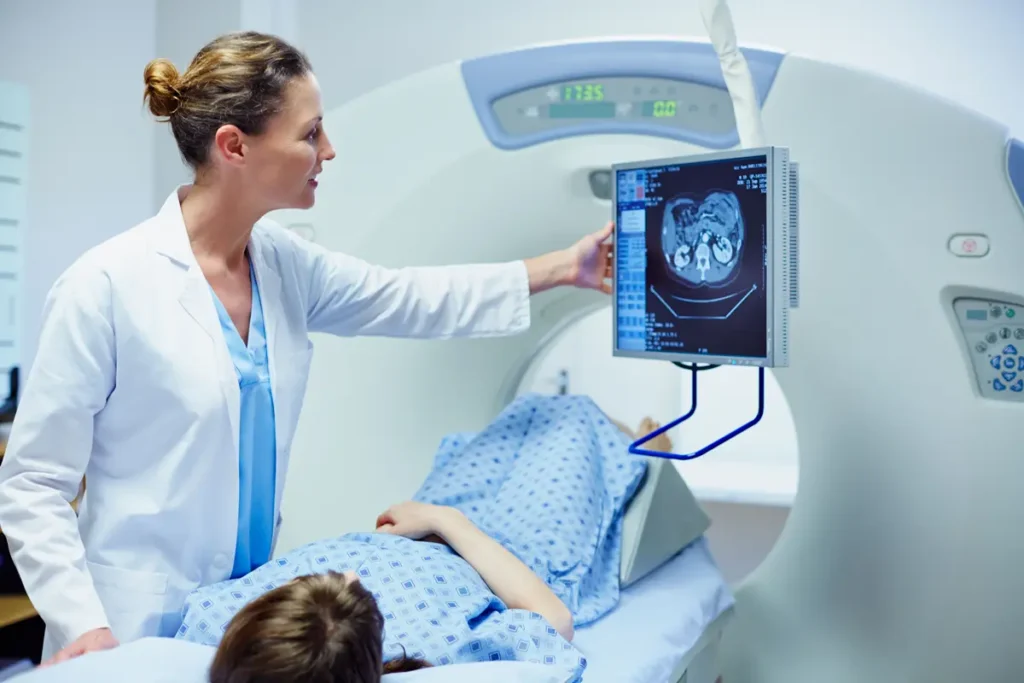
Technological innovations are helping overcome some of these restrictions. Portable imaging devices carrying diagnostic capabilities to remote areas, such as PET-CT scanners. This combines structural and functional imaging for more comprehensive calculations.AI is integrated to imaging systems to assist with early detection, and reduce human error.
Medical Imaging Technologies: Progressing Contemporary Healthcare
Medical imaging technologies have transformed the way healthcare professionals diagnose, monitor, and treat a wide range of medical conditions. Advanced imaging systems offer comprehensive insights into the human body without requiring invasive procedures, from identifying fractures and detecting cancer to assessing heart disease and neurological disorders.
What Are Medical Imaging Technologies?
The group of diagnostic instruments that produce visual depictions of internal organs, tissues, bones, and blood vessels is referred to as medical imaging technologies. These imaging methods help physicians make accurate diagnoses, develop personalized treatment plans, and monitor patient recovery over time.
In order to improve clinical decision-making and improve patient safety and healthcare outcomes, modern hospitals, diagnostic facilities, and research institutions rely on imaging solutions.
Common Types of Medical Imaging
Several imaging modalities serve different diagnostic purposes:
X-ray Imaging: Ideal for detecting bone fractures, lung infections, and dental issues.
Computed Tomography (CT): Produces detailed cross-sectional images for trauma assessment, cancer detection, and internal injuries.
Using magnetic fields, magnetic resonance imaging (MRI): creates high-resolution pictures of the brain, spinal cord, joints, and soft tissues.
Ultrasound Imaging: A radiation-free technique commonly used during pregnancy and for examining organs, blood flow, and soft tissues.
Positron Emission Tomography (PET): Helps evaluate metabolic activity and is widely used in oncology, cardiology, and neurology.
Each technology offers unique advantages depending on the patient’s condition and the diagnostic requirements.
Advanced Medical Imaging’s Advantages
The evolution of diagnostic imaging has significantly improved healthcare delivery. Among the main advantages are:
Early detection of diseases and abnormalities
Accurate diagnosis with minimal invasive procedures
Better treatment planning and surgical guidance
Continuous monitoring of chronic conditions
Faster emergency care and clinical decision-making
Improved patient outcomes through precise diagnostics
These benefits allow medical professionals to provide more efficient and individualized care.
Emerging Trends in Medical Imaging Technologies
Innovation continues to transform the medical imaging sector. Artificial intelligence is enhancing image analysis by assisting radiologists in detecting abnormalities more efficiently. Cloud-based imaging platforms allow secure storage and remote access to diagnostic images, improving collaboration among healthcare professionals.
Additionally, 3D imaging, digital radiography, portable ultrasound devices, and AI-powered diagnostic software are making imaging more accessible, accurate, and cost-effective across hospitals and outpatient facilities.
The Future of Medical Imaging
As technology advances, medical imaging technologies will become ever more sophisticated, quicker, and patient-friendly. Machine learning, automation, and advanced visualization techniques are expected to improve diagnostic accuracy while reducing scan times and radiation exposure. These innovations will continue to support precision medicine and help clinicians deliver better healthcare experiences.
Conclusion
Medical imaging technologies play a vital role in modern medicine by enabling accurate diagnosis, effective treatment planning, and continuous patient monitoring. As healthcare embraces digital transformation and artificial intelligence, imaging solutions will remain at the forefront of medical innovation, helping improve patient care and clinical outcomes worldwide.
FAQs
1. What are medical imaging technologies?
Medical imaging technologies are diagnostic instruments that produce images of the human body’s interior. They help healthcare professionals detect diseases, diagnose medical conditions, and monitor treatment progress without invasive procedures.
2. What are the main types of medical imaging?
X-rays, computed tomography (CT) scans, magnetic resonance imaging (MRI), ultrasound, positron emission tomography (PET), and mammography are the most popular forms of medical imaging. Each imaging method is designed for specific medical purposes.
3. What is the significance of medical imaging technologies?
Early disease identification, precise diagnosis, treatment planning, and continuous patient monitoring are all made possible by medical imaging technologies. They improve clinical decision-making and help healthcare providers deliver better patient outcomes.
4. Is it safe to use medical imaging?
Most medical imaging treatments are deemed safe when conducted by qualified specialists. While MRI and ultrasound do not use ionizing radiation, certain procedures, like CT scans and X-rays, do.
5. What is the difference between an MRI and a CT scan?
An MRI uses magnetic fields and radio waves to produce detailed images of soft tissues, while a CT scan uses X-rays to create cross-sectional images of bones, organs, and blood vessels. The decision is based on the medical condition under consideration.