

Introduction to the Capybara
You might want to familiarize yourself with the capybara. This incredible species, dubbed the world’s largest rodent, is a genuine gentle giant that has captured the hearts of many. Just imagine a very tranquil animal resting along the sides of rivers or feasting on luscious vegetation. The capybara is more than a very interesting mammal; it’s a vital part of the ecosystem.
In this comprehensive guide, we will delve into what makes capybaras so unique, ranging from their physical characteristics and behaviors to their diets and natural habitats. Are you interested in knowing more about their family structure or human-cadibara interaction? Well, you are in luck because this comprehensive guide contains all that you need to know and more!
Biophysical Attributes and Habitats
The capybara has been given the scientific name *Hydrochoerus hydrochaeris* and is a rather remarkable species of rodent. It is in fact the world’s largest rodent, growing up to 150 pounds in weight and four feet in length. It has a coarse coat of fur that varies in color from brown to reddish-brown in hue.
Capybaras possess webbed feet, which make them excellent swimmers. Their eyes and nostrils are located on top of their heads, allowing them to breathe and see despite being mostly under water.
These gentle giants like to reside in areas around water sources like rivers, lakes, and swamps. They prefer to settle in areas where lush vegetation provides them with food as well as protection from predators. They interact in groups of at least ten of their kind, forming relationships within their territory through activities like basking in the sunlight along waterfronts or grazing in nearby grasslands.
Behavior And Social Life
Capybaras are distinct because of their docile, relaxed nature and their surprisingly social way of living. They like to have company and usually exist in a group, which could be a herd of at least ten individuals. This social arrangement provides security and companionship.
These kinds of groups establish an informal pecking order. Led by the dominant males, the herd is guided, particularly on foraging expeditions or when danger from predators is present. Relationships mean everything, and ways of demonstrating affection exist, including grooming one another to improve friendships.
Communication also has an important role. They use a combination of sounds, including barks, whistles, and purrs, to communicate feelings or alert others to potential danger.
Their temperament makes it easy for them to coexist not only with other capybaras but also other animals in their environment such as birds and monkeys. But how exactly do capybaras eat?
Diet and Feeding Habits
Capybaras are herbivorous and prefer grass. They graze in the different vegetation that encompasses their diet.
They also tend to eat water vegetation in their wetlands, indicating their adaptability in searching for food.
The capybara also has a unique trait among rodents. They practice coprophagy. This is the act of eating their own feces. The aim is to acquire additional nutrients from their vegetarian diet.
In captivity, they are fed hay, vegetables, and a specially prepared pellet diet. A liberal supply of water is also imperative. They enjoy soaking while munching.
In a way, the diet of capybaras contributes to maintaining the balance of their environment because it controls the growth of the grass in the region around the animals.
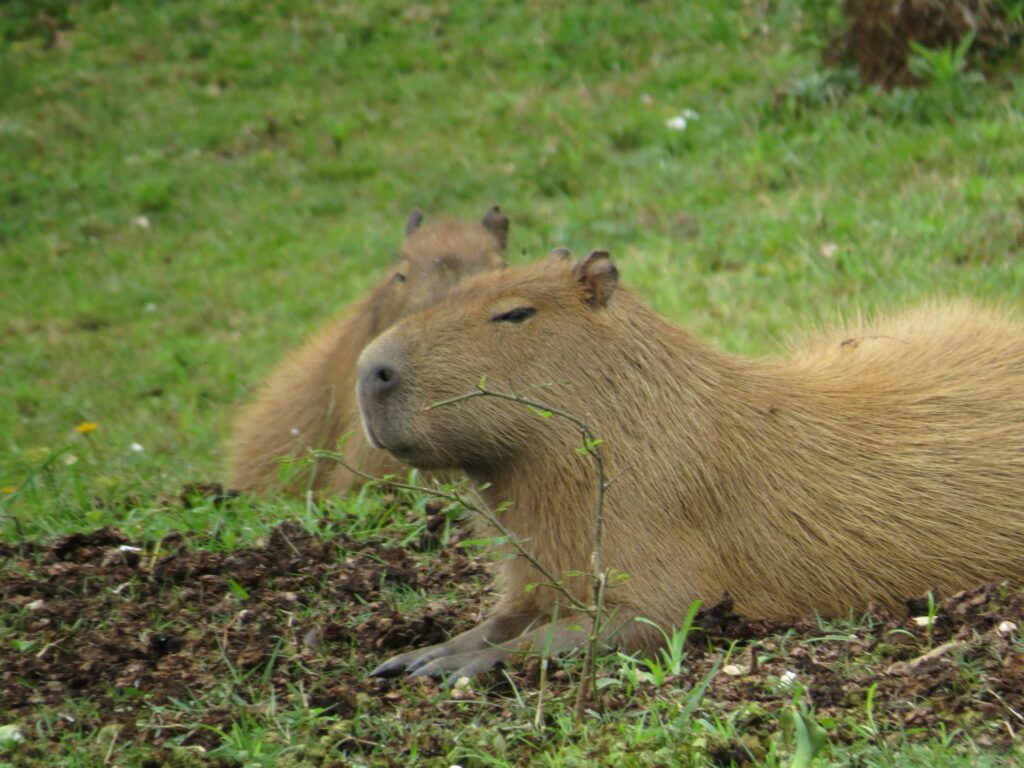
Capybara: Reproduction and Family Life
Their reproduction cycle revolves around the seasons. The major rains provide an ample supply of food, which is the major cause of reproduction. The female reproduces after 150 days, after which the adults deliver an average of four to five pups.
The babies are incredibly self-reliant. Indeed, hours after they were born, they can walk and swim. This is quite beneficial for the babies in order to survive in the wild environment.
Capybaras’ family life is quite close and caring. The females take care of their offspring, and their babies stay under their constant protection. Not all the individuals in a group belong to a single family. Often, you will find a group of females with their babies.
Their social environment fosters community care. Other individuals help out to protect and care for the puppies, which strengthens group ties and chances of each successive group of individuals thriving in the environment.
You can also read about: Chantel Wiske
Humans and Capybaras
People are also in awe of capybaras‘ friendly character. Their calm nature has made them popular in zoos, farms, and other environments.
These rodents are known to roam freely in cities, and they are common sights resting near ponds or walking in parks. These are normally peaceful meetings due to the calm nature of these rodents.
Social media has further heightened the public’s perception of the capybara as a lovable and amiable animal. Videos of the fun times they have are shared all over social media. These videos show the animal’s charming nature and have captured
However, it’s significant to pay respect to their original, wild lineage. They cope quite well with the human factor, but capybaras, at the end of the day, are still wild animals.
Conserving Capybara: A Gentle Call to Action
Those who protect the wild understand the need for capybaras as much as we need them for their use as a source of fur. Moreover, the survival of capybaras is dependent on the conservation of their habitat, which is being threatened by the growth of agricultural and urban areas.
Organisations are working tirelessly to educate people about why such natural habitats are important. Educational programs are used to convey how capybaras relate to other living things.
Legal safeguards for certain countries reduce the hunting of capybaras, providing a safe haven for their growth. For example, such legislation is a stepping stone to a healthier, less threatened species.
Ecotourism provides another avenue in that citizens can view capybaras in a respectable way while contributing to the local economy and conservation efforts. This responsible travel makes way for a more symbiotic relationship between humans and these calm giants.
The key to progress is teamwork—among governments, NGOs, and local people. Together, we can guide the future of this fascinating species toward safety in the face of growing threats.
Conclusion: Capybara
These animals fascinate because of their tranquil and social habits and the crucial part that they play in their environments. They have an effect on plant life and the lives of other animals.
Learning more about capybaras increases our appreciation of wildlife and further supports the idea of coexisting with animals. Getting behind the protection of their habitat will ensure the species continues to thrive within the environment.
With increased awareness, there will be a higher probability of people appreciating the importance of protecting such unique rodents. The capybara tale has not come to an end yet, as we continue studying the characteristics of such animals.
FAQs
What is the meaning or purpose of Capybara?
- Capybaras can also be called capybaras. They are the largest kind of rodent worldwide. A cadibara can weigh as much as 150 pounds and can measure over four feet long.
Where do Capybaras live?
- They can live in various South American conditions, including wetlands, grasslands, or dense vegetation close to water, which is ideal for their semi-aquatic lifestyle.
What do Capybaras eat?
- These gentle giants are plant-eaters, mostly feeding on grass and aquatic vegetation. In addition, they consume fruits and tree bark occasionally.
Are Capybaras social animals?
- “Absolutely.” Capybaras are very social animals and usually live in groups of 10 to 20, and their social behaviors are largely dominated by their strong social structures.
What method do they use to reproduce?
- Females tend to give birth once per year, after a gestation of about five months. They give birth to a litter of four pups, which become accustomed to their environment under the care of their parents.
Are Capybaras pets?
- Yes, capybara can be kept as While their friendly nature may make them attractive, capybaras need a lot of land to accommodate their habitat. Additionally, many regions have regulations governing their ownership.
Are there any conservation efforts for Capybaras?
- Conservation organizations are working towards saving Cadibara species from extinction and raising awareness of the significance of such unique rodents.
Do they have any predators?
- Yes. There are dangers from jaguars, caimans, and large snakes; but living in a group makes them safer through their collective vigilance. Whether you’re attracted to their size or interested in their lifestyle, these so-called giants of the jungle remind us of the diversified wildlife.